Claim Your Free Estimate Today
Table of Contents
- What Whole House Repiping Cost Actually Includes
- Whole House Repiping Cost by Square Foot and Home Size
- PEX Repiping Cost vs. Copper and CPVC
- The Whole-House Repiping Timeline: From Quote to Final Inspection
- Homeowners Insurance and Repiping: What’s Typically Covered
- When Repiping Is Necessary vs. Targeted Repair
- How to Compare Repiping Quotes and Avoid Getting Overcharged
- Frequently Asked Questions
Last Updated: October 8, 2026
What Whole House Repiping Cost Actually Includes
Whole house repiping cost is the total price to replace every water supply line in a home, from the main shutoff valve to each fixture.
Most homeowners picture a single number. That number doesn’t exist until a plumber walks the property.
At Acclaimed Drain And Plumbing Solutions, LLC, we quote repipes every week across Tucson and Southern Arizona. The same three variables drive the price on every job.
Materials, Labor, and Access: The Three Cost Drivers
Pipe material sets the baseline. PEX, CPVC, and copper sit at different price points, and each one changes the labor time too.
Labor covers the hours to cut, route, and connect every line. A simple layout moves fast.
Access is the wild card. Pipes buried behind drywall, tile, or concrete add repair work that has nothing to do with plumbing.
Key Takeaway
Two homes of the same size can land thousands apart on price. Access, not square footage, is usually the reason.
Two homes of the same size can land thousands apart on price. Access, not square footage, is usually the reason.
Whole House Repiping Cost by Square Foot and Home Size
Whole house repiping cost by square foot is the most common way contractors estimate a job. Bigger homes need more pipe, more fittings, and more hours.
But square footage alone misleads. A small home with two bathrooms and a long main run can cost more than a larger one with simple plumbing.
One-Story vs. Two-Story Homes
A one-story home keeps every line on a single level. Crews work faster and open fewer walls.
A two-story home adds vertical runs between floors. That means more pipe, more access points, and more time.
| Home Type | Pipe Runs | Access Difficulty | Relative Cost |
|---|---|---|---|
| One-story, one bathroom | Short, simple | Low | Lowest |
| One-story, two bathrooms | Medium | Moderate | Moderate |
| Two-story, two bathrooms | Long, vertical | High | Higher |
| Mobile home | Compact, tight | Varies | Often lower |
The number of plumbing fixtures matters as much as size. Each toilet, sink, shower, and appliance needs its own hot water line and cold water line.
PEX Repiping Cost vs. Copper and CPVC
PEX repiping cost usually comes in below copper for the same home. PEX-A flexes around corners, needs fewer fittings, and installs faster.
Copper lasts a long time but costs more in material and labor. It also takes longer to install.
CPVC sits in the middle. It’s rigid like copper but cheaper, though it can get brittle over time.
| Material | Relative Material Cost | Relative Labor Cost | Life Expectancy |
|---|---|---|---|
| PEX-A | Lower | Lower | Long |
| CPVC | Moderate | Moderate | Moderate |
| Copper | Higher | Higher | Long |
Polybutylene is the material nobody wants to hear about.
Watch Out
If your home has polybutylene or galvanized steel lines, waiting for a leak often costs more than repiping. A burst pipe inside a wall damages drywall, flooring, and sometimes the ceiling below.
If your home has polybutylene or galvanized steel lines, waiting for a leak often costs more than repiping. A burst pipe inside a wall damages drywall, flooring, and sometimes the ceiling below.
The Whole-House Repiping Timeline: From Quote to Final Inspection
A typical whole-house repiping project runs two to five working days of on-site labor for an average single-family home, with smaller one-story homes finishing in as little as one to two days and larger two-story homes with multiple bathrooms stretching to a week or more. The quote, permit, and inspection phases add calendar time before and after the crew arrives.
Here is how the process usually flows, with realistic timing for each phase:
-
Evaluation and quote (1-3 days). A licensed plumber walks the property, locates the main shutoff, checks static and dynamic water pressure, inspects visible pipe material, and may run a camera or acoustic leak survey. You receive a written, itemized quote. Expect this step to take longer if the home has a slab foundation or finished basement ceilings that hide the main runs.
-
Permit filing (1-10 business days, varies widely). The contractor submits plans or a permit application to the local building department. Turnaround depends entirely on the jurisdiction, some issue over-the-counter permits same day, others require plan review that can take a week or more. Ask your contractor who pulls the permit and whether the fee is included in the bid.
-
Pre-project preparation (day before or morning of). Crews move furniture away from walls, lay drop cloths and floor protection, identify which fixtures will be offline, and mark planned access openings. This is when you should plan to be without normal water service for the duration of the install.
-
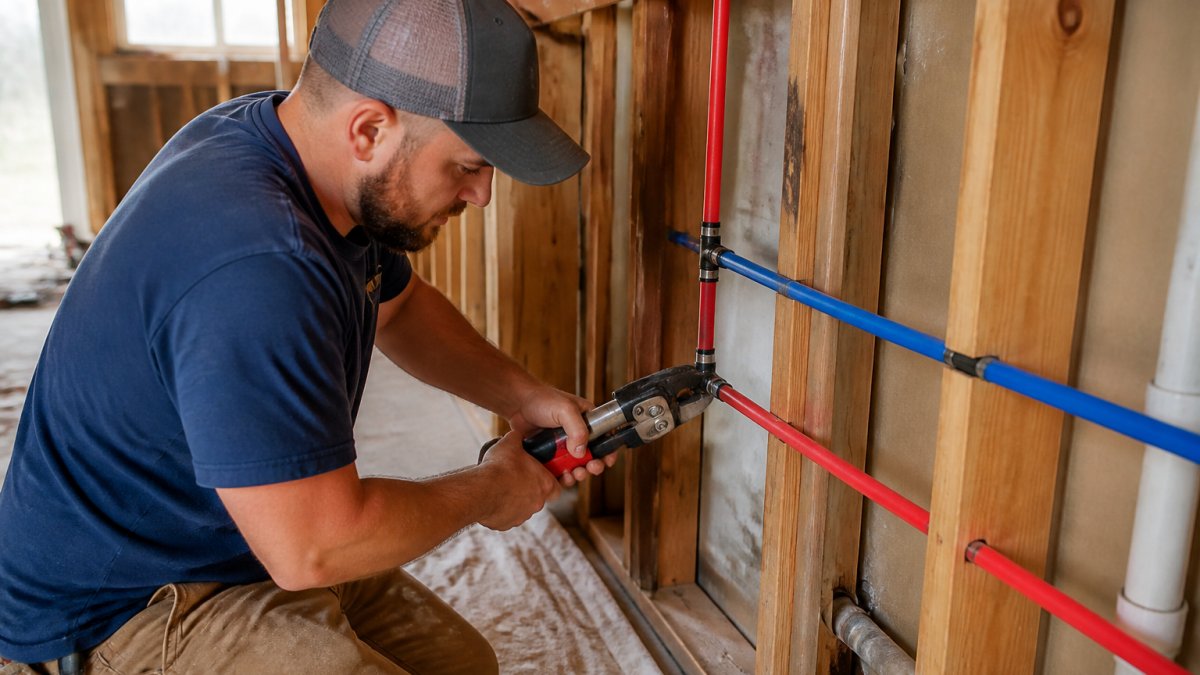
Installation (1-5 working days). Old lines are cut out and new PEX, CPVC, or copper is routed. Crews typically work section by section, keeping at least one working fixture available as long as possible. Access openings are cut in drywall, and in slab homes the new lines are often rerouted through the attic or walls to avoid breaking concrete.
-
Pressure testing (same day as install completion). The new system is capped and pressurized, commonly to around 100 psi or per local code, and held to confirm no leaks before walls are closed. This step is non-negotiable; a failed test means re-opening work.
-
Wall and ceiling access repair (1-3 days). Openings get patched, taped, and textured. Full paint matching is often a separate line item or a separate trade, so confirm in writing whether your quote includes paint or just drywall.
-
Final inspection (scheduled within a few days of completion). A local inspector verifies material, support spacing, and test results, then signs off. Keep the inspection record, it matters at resale and for some insurance claims.
What to Expect During the Work
Plan for water to be off for several hours at a time, often most of a working day. Most homeowners stay in the home during a repipe, but if you have young children, a home office, or a household member with medical needs, a short hotel stay during the heaviest install days is a reasonable precaution. Clear access to the main shutoff, the water heater, and any attic or crawlspace hatch before the crew arrives.
Pro Tip
Ask your contractor for a written day-by-day schedule before work starts. A crew that can tell you which day water will be off and which day the inspector is scheduled is a crew that has done this before.
Ask your contractor for a written day-by-day schedule before work starts. A crew that can tell you which day water will be off and which day the inspector is scheduled is a crew that has done this before.
Permits, Inspections, and Code Requirements
Permits and inspections are not optional, and they are not free. Most jurisdictions require a permit for repiping, and the fee, often a few hundred dollars depending on the scope and the local fee schedule, shows up in your quote. Code requirements cover pipe material approval, support spacing (commonly every 32 inches for PEX and every 6 feet for copper, though the exact figure follows the adopted plumbing code), and pressure testing procedures.
Homeowners Insurance and Repiping: What’s Typically Covered
Homeowners insurance and repiping rarely mix the way people hope, and the reason comes down to one word: causation. Standard HO-3 policies cover “sudden and accidental” discharge of water from a plumbing system. They do not cover the cost of replacing pipes that failed from age, corrosion, or gradual deterioration, because that is considered maintenance, not a covered peril.
Here is the split most homeowners see:
- Covered: Water damage from a sudden burst or supply-line failure, plus the tear-out needed to reach the failed pipe. If a pipe bursts behind a wall and soaks drywall, flooring, and a ceiling below, the resulting damage is typically a covered claim.
- Usually not covered: The repipe itself, especially when it is preventive or done because the pipes are old. Insurers treat the pipe as the cause, not the loss.
- Sometimes covered: Damage from a freeze event, depending on the policy and whether the home was heated and occupied. Many policies exclude freeze damage if the home was vacant or unheated.
Sudden vs. Gradual: Why the Distinction Matters
The adjuster’s first question is almost always whether the damage was sudden or gradual. A pipe that failed overnight and flooded a room is sudden. A slow drip that stained a ceiling over months is gradual, and gradual damage is excluded under most policies. This is why documenting the timeline matters: photos of the failure, the date you noticed it, and a plumber’s written assessment all help establish that the event was sudden.
What to Do If You File a Claim
- Stop the water and document everything. Shut off the main, then photograph and video the damage before any cleanup.
- Call your insurer promptly. Most policies require notice within a reasonable time, often defined in the policy language.
- Keep receipts. Hotel stays, emergency plumber calls, and water extraction are often reimbursable under loss-of-use or additional-living-expense coverage.
- Get the plumber’s report in writing. A statement that the failure was sudden and not the result of long-term neglect supports the claim.
- Appeal a denial if the facts support it. Denials are sometimes reversed when the homeowner provides a licensed plumber’s opinion that the failure was sudden.
Watch Out
Do not assume a repipe will be covered because a pipe leaked. The leak damage may be covered while the repipe is not. Read the exclusions section of your policy, usually labeled “Exclusions” or “Losses Not Insured”, before you assume anything.
Do not assume a repipe will be covered because a pipe leaked. The leak damage may be covered while the repipe is not. Read the exclusions section of your policy, usually labeled “Exclusions” or “Losses Not Insured”, before you assume anything.
How Repiping Affects Future Insurability
Some insurers surcharge or decline homes with polybutylene, galvanized steel, or known recurring leaks. Completing a permitted repipe with documentation can remove that surcharge and, in some cases, qualify the home for a preferred tier. Ask your agent whether a completed repipe with an inspection record changes your rate, the answer is often yes, and it is worth a phone call before you sign the contract.
When Repiping Is Necessary vs. Targeted Repair
Repiping makes sense when the pipes themselves are failing. Targeted repair makes sense when one section has a problem and the rest of the system is sound.
Signs you need a repipe, not a patch:
- Recurring leaks in different parts of the house
- Discolored water from multiple fixtures
- Low water pressure that flushing doesn’t fix
One leak in a newer copper system is a repair. Three leaks in a 40-year-old galvanized system is a replacement.
Pro Tip
Ask your plumber to run a camera inspection and pressure test before you decide. The findings tell you whether one line failed or the whole system is on its way out.
Ask your plumber to run a camera inspection and pressure test before you decide. The findings tell you whether one line failed or the whole system is on its way out.
How to Compare Repiping Quotes and Avoid Getting Overcharged
Comparing repiping quotes takes more than looking at the bottom line. The cheapest bid often leaves out permits, patching, or testing.
Ask every contractor for these details:
- Itemized breakdown. Materials, labor, permits, and wall repair listed separately.
- Pipe material named. PEX, CPVC, or copper, with the brand.
- Permit included? If not, who pulls it?
Use this checklist when you review bids:
- Written, itemized quote
- Pipe material and brand specified
- Permit and inspection included
A bid that skips permits or patching isn’t cheaper. It just moves the cost to you later.
Replacing every water line in a home is a big decision, and the price depends on details only an on-site look can confirm. Our team handles whole-home repiping, leak detection, and water service line replacement with clear documentation at every step.
Frequently Asked Questions
How much does it cost to repipe a 2,000-square-foot house?
Whole house repiping cost for a 2,000-square-foot home depends on pipe material, the number of fixtures, and how accessible the existing lines are. PEX typically costs less than copper because the material and labor are lower. Homes with slab foundations or finished walls add cost for access and restoration. Request a free estimate from a licensed plumber who will walk the home, count fixtures, and provide an itemized quote.
Is PEX or copper more affordable for repiping?
PEX repiping cost is generally lower than copper because the tubing itself costs less and it installs faster with fewer joints. Copper lasts longer and handles higher heat, but the material price fluctuates with the metals market. CPVC sits between the two. For most homeowners, PEX-A offers the best balance of price, flexibility, and freeze resistance, though a licensed plumber should confirm what suits your home’s layout and local code.
Will homeowners insurance pay to repipe a house?
Homeowners insurance and repiping coverage varies by policy. Most standard policies cover sudden water damage from a burst or failed pipe, but they typically exclude the pipe replacement itself as a maintenance item. If a covered event caused the damage, the insurer may pay for access and restoration while you cover the repipe. Review your policy and ask your adjuster whether repiping is covered before scheduling work.
How long does a whole-house repiping project take?
The whole-house repiping timeline usually runs two to five days for an average single-family home, depending on size, stories, and access. A one-story home with a crawl space moves faster than a two-story on a slab. Permits and inspections can add a few days. Expect the water off during working hours, wall openings at fixture locations, and a short period for patching and paint touch-up afterward.